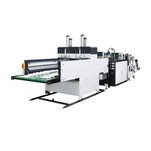
Operation Guidelines for Blown Film Machine
I. Startup & Operational Safety
1. Operators must wear personal protective equipment including heat-resistant gloves, safety goggles and work uniforms. Keep long hair and loose clothing away from rotating parts, die head and pull rolls at all times.
2. Before startup, inspect the electric circuit, heating system, fans and rewinding mechanism. Ensure no foreign objects cause jams. Maintain effective communication when working as a team.
3. The die head and barrel operate at extremely high temperatures. Never touch them with bare hands. Follow standard procedures when cleaning residual materials or handling material breaks to avoid scalds.
4. Do not reach into roll sets or pull frames while the machine is running. For maintenance work, **power off and stop the machine completely**, and post warning signs.
II. Raw Material & Proportion Control (Cost & Quality Focus for Small Factories)
1. Store raw materials separately. Use virgin material, trimmings and recycled material respectively. **Do not use excessive recycled material**, as it will cause surface defects and reduce film tensile strength.
2. Dry raw materials in advance. Moist PE, HDPE and LDPE tend to form bubbles and pinholes, which compromise finished product quality.
3. Add color masterbatch and additives as required and mix evenly to avoid local color deviation and precipitation. Do not randomly blend raw materials of different grades.
III. Temperature & Process Parameter Adjustment
1. Set temperatures for the barrel and die head by material grade with sectional temperature control. Excessively high temperature will decompose materials and produce odor and burnt scraps; excessively low temperature leads to poor plasticization and uneven film thickness.
2. New operators shall only make minor adjustments instead of drastic parameter changes. Match air volume and pull speed according to film width, thickness and extrusion speed.
3. Keep stable air volume of the air ring. Uneven airflow will cause bubble deviation and severe thickness inconsistency.
IV. Daily Equipment Maintenance
1. After daily shutdown, clean residual materials and dust on the die head, air ring and roll surfaces to prevent carbonized deposits from scratching the film.
2. Regularly check and lubricate reducers, bearings and chains on schedule to prevent abnormal noise, jamming and component wear.
3. Inspect temperature controllers, sensors and motor circuits. For simple wiring in small factories, strictly guard against circuit aging and electric leakage.
4. Adjust rewinding units and cutters periodically to ensure neat winding and smooth trimming.
V. Production Environment & Environmental Protection
1. Keep the workshop well ventilated. Slight gas will be generated during material plasticization. Odor accumulation in enclosed spaces is harmful to health.
2. Collect and stack trimmings and waste materials in a classified and timely manner. Keep walkways clear to eliminate potential fire hazards.
3. Maintain a clean floor to prevent slips and falls caused by oil stains and plastic scraps.
VI. Quality & Output Control
1. Conduct regular spot checks on film thickness, transparency, tensile strength and flatness during production. Stop the machine for adjustment immediately if bubble deviation, wrinkles or holes are found.
2. Do not run small-sized machines at overloaded speed. Long-term overload operation will greatly shorten service life and increase failure rate.
3. Stable film bubble is essential. Timely adjust the air ring, pull unit and die head level once bubble offset occurs.
VII. Storage & Shutdown Regulations
1. Empty residual materials in the barrel for long-term shutdown to prevent material carbonization under prolonged high temperature.
2. Store finished films with moisture-proof and dust-proof measures. Classify products by specifications and batches for convenient delivery management.
3. Cut off the main power supply, turn off heating and fans after work, and complete inspection of equipment and workshop.