

Film Blowing Machines
Why Choose Us
Our Ruian Mingfeng Machinery Co.,Ltd. is a professional manufacturer of film blowing machine, plastic bag making machine, printing machine and recycling machine etc.
Experienced Team
Established a group of highly skilled after-sales service teams,including experienced engineers and senior technicians. We also gain multiply national invention patents.
Excellent Product Quality
We are committed to providing high-quality machinery through advanced manufacturing technology and rigorous quality control processes, ensuring each product meets the highest standards. Our equipment is meticulously designed, offering outstanding performance and durability to meet customer demands for reliability and quality.
Reasonable Prices
At Ruian Mingfeng Machinery Co.,Ltd., we believe that high-quality machinery should not be synonymous with exorbitant prices. Through lean production and efficient management, we reduce production costs and pass these cost advantages directly to customers, ensuring our products are competitively priced in the market.
Outstanding Service
Customer satisfaction is paramount in our service philosophy. We have established a professional and efficient customer service team ready to answer inquiries, provide technical support, and ensure customers receive optimal support and experiences during the purchase, installation, and usage processes. We prioritize communication with our customers, offering not only products but also solutions to meet diverse needs.
-
 Small Pe Blow Blowing Film Printing LineThis Plastic Blown Extrusion Machine manufactures durable HDPE LDPE LLDPE agricultural films. With rotating die head and precise extrusion control it ensures uniform film thickness and wide foldedAdd to Inquiry
 -
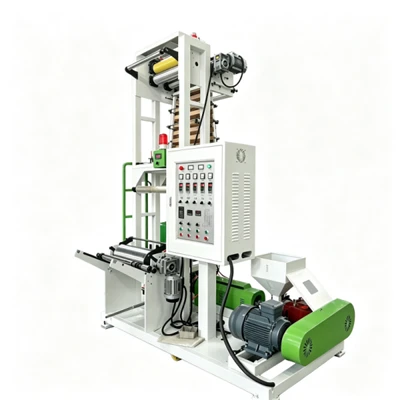 Mini Blow Film Machine High SpeedThis film blowing machine set is to satisfy the customer's requirements of high quality, high out put film blowing equipment.It is optimum designed on the trounds of preference of analogous lines inAdd to Inquiry
 -
 Rotary Die Head Single Film ExtruderThis kind machine is plastic film blowing machine,for making HDPE,LDPE,LLDPE plastic film rolls.The film widely used for agricultural film,greenhouse film,plastic bag making,etcAdd to Inquiry
 -
Small Blown Film Extruder MachineThis film blowing machine set is to satisfy the customer's requirements of high quality, high out put film blowing equipment.It is optimum designed on the trounds of preference of analogous lines inAdd to Inquiry
-
Mono Layer Blown Film ExtruderThis kind machine is plastic film blowing machine,for making HDPE,LDPE,LLDPE plastic film rolls.The film widely used for agricultural film,greenhouse film,plastic bag making,etcAdd to Inquiry
-
 Plastic Zipper Bag Blowing MachineThis film blowing machine set is to satisfy the customer's requirements of high quality, high out put film blowing equipment.It is optimum designed on the trounds of preference of analogous lines inAdd to Inquiry
 -
Nylon Bag Film Blowing MachineThis film blowing machine set is to satisfy the customer's requirements of high quality, high out put film blowing equipment.It is optimum designed on the trounds of preference of analogous lines inAdd to Inquiry
-
Zipper Bag Film Blolwing MachineThis film blowing machine set is to satisfy the customer's requirements of high quality, high out put film blowing equipment.It is optimum designed on the trounds of preference of analogous lines inAdd to Inquiry
-
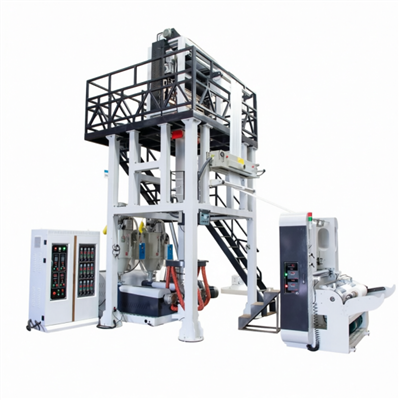 Agricultural Greenhouse Film Blowing MachineThe ABA Film Blowing Machine is an advanced co-extrusion system designed for producing high-performance multilayer films from HDPE, LDPE, and LLDPE materials. By leveraging a unique three-layerAdd to Inquiry
 -
Plastic Film Blowing Printing MachineThis Plastic Blown Extrusion Machine manufactures durable HDPE LDPE LLDPE agricultural films. With rotating die head and precise extrusion control it ensures uniform film thickness and wide foldedAdd to Inquiry
-
Small Scale Film Production ExtruderThis film blowing machine set is to satisfy the customer's requirements of high quality, high out put film blowing equipment.It is optimum designed on the trounds of preference of analogous lines inAdd to Inquiry
-
 Mini Blown Film Extruder MachineThis film blowing machine set is to satisfy the customer's requirements of high quality, high out put film blowing equipment.It is optimum designed on the trounds of preference of analogous lines inAdd to Inquiry


- Mob: +8615167807851
- mingfengmachinery@163.com
- Add: Jielutou Industrial Zone, Ruian, Zhejiang, China
The bag making machine is an important tool in the packaging industry. This machine can make plastic, or paper bags of various sizes, shapes and materials. Bag production has become popular with the concept of automated packaging process, which requires less human labor. If you want to know the specifications and prices of Bag Making Machine, please contact us!
Advantage of Film Blowing Machines
Blowing machinery produces high-quality and durable plastic films that are resistant to tear, wear, and damage. These films offer excellent flexibility, making them ideal for various applications.
The machinery is cost-effective, allowing manufacturers to produce large quantities of films at low costs. This cost-effectiveness allows them to sell these products at competitive prices, making them available to many customers.
Film blowing machinery can produce an array of films, including laminating film, packing film, agricultural covering films, and bags, among others. This versatility makes the machinery an ideal choice for numerous industries.
The machinery’s automated process allows for high-speed production, making it possible to produce thousands of feet of films within a short time. Automated processes can also reduce the risk of human error, ensuring consistent quality.
Blowing machinery promotes environmental sustainability by using recycled materials and producing less waste than other traditional processes. This sustainability helps conserve the environment for future generations.
Components of Film Blowing Machines
Die Head The die head adopts an advanced spiral die head structure. It is designed based on the special characteristics of high pressure, low pressure, mixed materials, and recycled polyethylene materials. The main technologies, such as helix angle, slope angle, fixed angle length, and die opening, have been carefully designed, selected, and optimized through multiple comparison tests. This die head offers several advantages, including high internal pressure, stable and uniform extrusion, excellent film strength performance, and seamless integration with the extruder in this unit. It eliminates the need for die head replacement when producing blown film with different ratios of materials and recycled materials. Moreover, we can prepare various types of die heads according to user needs, and the replacement process can be easily performed by a single person. It is a simple, safe, convenient, and fast operation.
Cooling Device The cooling device consists of a cooling air ring and a blower. The externally cooled adjustable air ring enables the control of film thickness and uniformity by adjusting the opening degree of the inlet tuyere. It is user-friendly and facilitates efficient cooling.
Bubble Stabilizer To maintain bubble stability, this unit employs an adjustable ring and shaped rod adjustable structure. This design allows for a wide range of adjustments, making it convenient to stabilize the bubble frame. The stable bubble tube created by this system lays the foundation for achieving a flat coiling tube.
Traction Assistance Machine The auxiliary traction machine comprises key components such as a traction frame, herringbone plates, traction rollers, a winding mechanism, and a traction motor. The traction motor uses an electromagnetic slip-type motor, which drives two pairs of traction rollers through the deceleration part while simultaneously powering the winding machine. The herringbone plate is fixed on the fixing frame beneath the traction roller and can be adjusted at will according to the desired thickness of the blown film. The rubber and steel rollers used in the two pairs of traction rollers effectively prevent gas leakage and ensure proper coiling. The modular design of the traction frame enables easy disassembly and assembly, facilitating transportation and loading/unloading. The take-up device adopts an efficient central take-up mechanism that ensures constant tension. The sprocket drives the friction plate, which in turn drives the large gear and the take-up shaft. This mechanism allows for smooth changes in take-up diameter from small to large, with the friction force easily controlled by adjusting the spring force.
Air Compression Compressed air from the air compressor and storage tank enters the center hole of the spiral core rod of the die head through the tank's outlet valve. The air then enters the center of the bubble tube through the mandrel's center hole, blowing out the plastic material and forming a film in the shape of a bubble tube.
Electrical Control The electrical control system is equipped with a unit operation cabinet. The main power button is used to turn on the main power and motor switch. Different buttons and switches are provided to control the electric heating of the fuselage, tee, and die independently. The key components are equipped with thermocouple automatic temperature measurement and automatic temperature controllers. During normal production, the temperature can be automatically controlled to ensure stable and reliable production processes.
How to Cleaning of Film Blowing Machines
Resin Cleaning Method
This method involves cleaning the machine using resin, such as polyester resin or epoxy resin. It is typically employed on new equipment after a certain period of use. When material residue remains on the screw or inside the extruder, it can cause a decrease in extrusion speed and significant color differences when changing between different color varieties. Resin cleaning is an effective solution in such cases. After resin cleaning, the PVC resin to be produced is mixed with appropriate external lubrication and calcium powder to further cleanse the machine. Once the extrudate is considered clean, production can proceed as usual.


Non-Resin Cleaning Method
This method utilizes substances such as rice, corn, sawdust, toilet paper, or other materials with certain friction and crushability. When the extruder reaches the normal extrusion temperature, these substances are used to create friction against the screw and screw barrel, effectively removing PVC resin adhered to their surfaces. Experience has shown that rice husks, due to their hardness and high friction force, provide better cleaning results. Following this method, it is essential to open the screw and inspect the machine's condition. Generally, before producing formal products, it is necessary to clean the machine with the PVC resin cleaning material formula using the same method outlined above.
Manual Cleaning Method
In the manual cleaning method, the extruder is heated to the operating temperature, and the screw is manually or automatically pushed out to remove easily removable material while still hot. Once cooled, the screw is immersed in an organic solvent tank containing acetone or cyclohexanone for soaking. As the molten residue attached to the screw dissolves and expands, it can be manually removed. The immersion duration depends on the number of adherents and the thickness of the residue. To conserve solvent usage and facilitate container sealing, steel pipes or stainless steel pipes with a slightly larger diameter than the screw can be utilized as immersion tanks, with one end welded shut for a secure seal. For safety purposes, the container holding the immersed screw should be kept in a cool location away from fire sources and power supplies. Seal the container's opening to prevent solvent evaporation, and ensure proper safety labeling is affixed.

- Maintaining a work environment void of oil or grease.
- Never reaching under or over the machine guards.
- Never wearing anything that dangles, such as necklaces, braces, watches, rings, or loose clothing to prevent limbs from getting trapped or pulled into the machine.
- Never disconnecting or by-passing the guard's safety switches.
- Using only quality materials specified for this blow molding process.
- Never climbing between the tie-bars during hydraulic pump operation.
- Always wearing protective gloves when adjusting manifolds or components on the hot die head.
- Never reaching into the machine's throat during granulator operation.
- Knowing the location of the nearest fire extinguisher.
- Always wearing approved ear protection to block out noise.
- Never using steel tools on the parting line, mold cores, and cavities.
- Knowing the location of the nearest first-aid kit.
- Always wearing safety glasses and steel-toed boots.
- Never standing directly below a mold suspended in the air.
- Regularly examining electrical cords and air hoses.
- Using the proper safety equipment when lifting heavy workpiece material.
- Never operating an extrusion blow molding machine without authorization and appropriate training.
Which pharmacies need to be controlled when the film blowing machine is working
Extruder temperature
When blowing low-density polyethylene (LDPE) film, the extrusion temperature is generally controlled between 160°C and 170°C, and the temperature of the die must be uniform. The extrusion temperature is too high, the resin is easy to decompose, and the film is brittle, especially Make the longitudinal tensile strength drop significantly; if the temperature is too low, the resin will not be plasticized and can not be expanded and stretched smoothly. The tensile strength of the film is low, and the surface gloss and transparency are poor, and even appear like wood growth rings. The pattern and the unmelted crystal nucleus (fisheye).
Blow up ratio
LThe blow-up ratio is one of the control points of the blown film production process. It refers to the ratio between the diameter of the film bubble after inflation and the diameter of the uninflated tube ring. The blow-up ratio is the transverse expansion multiple of the film. In fact, the film is stretched in the transverse direction. Stretching will have a certain degree of orientation effect on the plastic molecules, and the blow-up ratio will increase, thereby increasing the transverse strength of the film. However, the blow-up ratio should not be too large, otherwise the bubble will become unstable and the film will be prone to wrinkles. Therefore, the inflation ratio should be properly matched with the traction ratio. Generally speaking, the inflation ratio of low-density polyethylene (LDPE) film should be controlled at 2.5-3.0.


Traction Ratio
The traction ratio refers to the ratio between the traction speed of the film and the extrusion speed of the tube ring. The traction ratio is the longitudinal stretching multiple, which makes the film have a directional effect in the drawing direction. If the traction ratio increases, the longitudinal strength will also increase, and the thickness of the film will become thinner. However, if the traction ratio is too large, the thickness of the film will be difficult to control, and the film may even be broken, causing film breakage. The traction ratio of low-density polyethylene (LDPE) film is generally controlled between 4-6.
Dew Point
The dew point is also called the frost line, which refers to the dividing line of the plastic from the viscous flow state to the high elastic state. During the film blowing process, low-density polyethylene (LDPE) is in a molten state when extruded from the die, and has good transparency. After leaving the die, the blowing zone of the film bubble should be cooled by the cooling air ring. When the cooling air is blown to the plastic film bubble just extruded from the die at a certain angle and speed, the high temperature film bubble and cooling air In contact, the heat of the bubble will be taken away by the cold air, and its temperature will obviously drop below the viscous flow temperature of low-density polyethylene (LDPE), so that it will cool and solidify and become blurred. On the blown film bubble we can see a dividing line between transparency and blur, which is the dew point (or frost line).
Understand the Film Type
First and foremost, identify the type of film you intend to produce. Different film types (such as LDPE, HDPE, PP, PVC, etc.) have varying characteristics and applications. Understanding your film type will help determine the type of blown film machine you need.
Machine Compatibility
Ensure the chosen blown film machine is compatible with the film material you plan to use. Different film types require different extrusion systems, dies, and auxiliary equipment.
Film Thickness and Width Range
Consider the thickness and width range of your film. Different blown film machines have varying production capacities and adjustability to accommodate different film specifications.
Extrusion System
Determine if the chosen blown film machine's extrusion system is suitable for your film type. Different extrusion systems can handle various film materials and requirements.
Die Design
Choose a die design that suits your film type. The die's structure and shape will affect the uniformity and quality of the film.
Automation Level
Consider the level of automation in the blown film machine, including temperature control, winding control, and the user interface. Automation features can enhance production efficiency and consistency.
Energy Efficiency
Understand the energy consumption of the blown film machine to ensure it won't result in unnecessary energy wastage and increased production costs over the long term.
Electrical Maintenance
- Ensure the stability and reliability of the power supply, and that performance parameters meet specified requirements.
- Maintain appropriate temperature and humidity consistently, ensure a good transmission line, and eliminate electrostatic hazards.
- Regularly remove dust from radiators.
Note: In electrical maintenance, it is generally prohibited to tamper with after-sale core components.
Feeding Machine System
Immediately check the filter and inspect the negative pressure feeding system for air leakage.
Extruder System
- Carefully observe pressure instruments and main motor current, and perform real-time checks on the net changer.
- Check the gearbox, screw, and main motor for noise and looseness.
- Monitor the frequency, current, and temperature rise of the frequency converter, and regularly clean motor and frequency converter dust.
- Correct thermocouple measurements and address any discrepancies in actual temperature.
- Calibrate the extruder position, adjusting the grooved wheel to ensure the correct angle and level.
Die Head System
- Use a secondary smoking method during startup to prevent temperature overshooting.
- Prior to startup and shutdown, clean accumulated material with a pure copper scraper, and use paraffin to clean the die to reduce hydrogen fluoride's impact on the film bubble.
- Immediately cover the die head with protective felt after shutdown to prevent mold damage.
- Regularly check temperature and current in each zone, as well as heating plug-ins for the die head, correcting temperature differences.
- Calibrate the die head level and align the center point with reconnection; use a torque wrench to remove the molded screw, applying molybdenum disulfide grease to high-temperature areas of the screw.
Wind Ring Maintenance
Immediately check for debris and dust in the air ring.
Reconnection Device Maintenance
Ensure herringbone folding is pollution-free, hammer reconnection (cooling) roller pressure is suitable, and flattening roller operation is flexible.
Corona Processor Maintenance
Regularly clean the high-voltage transformer, coupling roller, coupling frame, and electric control box; adjust coupling clearances.
Check equipment humidity before starting to avoid coupling frame short circuits, and monitor coupling roller bearing running temperature.
Immediately replace the silicone tube.
After Holiday Maintenance of Blown Film Machine
Check Tightness of Film Blowing Machine Connections
Verify the fixing of film-blowing machine connecting parts to prevent overheating bolts.
Replace Gear Oil
Change the gear oil frequently in the main engine gearbox and reconnection sliding box to maintain normal operation of rotating parts.
Start Motor with Slow Acceleration
When starting the main motor, initiate motor start first, then slowly accelerate, and stabilize after reaching the specified speed.
If shutdown maintenance was performed, slide out first before shutting down.
Use Automatic Temperature Control System
Conditions permitting, opt for an automatic temperature control system to automatically set and stabilize upper and lower tolerance temperatures.
Monitor Main Engine Operation
After starting the main engine, closely monitor its operation, adjust and correct electrical instruments and controllers immediately, and replace any damaged components.
No Material Idling
Strictly prohibit maneuvering without material. Do not start the main engine when the cylinder, tee, and die head temperatures are below specified levels.
Maintain Balanced Compressed Air
Keep compressed air in the bubble tube balanced at all times to account for the release of compressed air during reconnection, ensuring immediate replenishment.
Step 1: Install the die head
Start by installing the die head on the extruder. The die head shapes the melted plastic into a tubular structure. Finally, make sure the die head is aligned and secure.
Step 2: Adjust the air ring
The air ring is responsible for cooling the plastic that is passing through the die head. To achieve the quality and thickness you desire, adjust the airflow and temperature.
Step 3: Calibrate the temperature and speed controls
Your machine's speed and temperature controls make sure that the plastic is heated and fed through the die at the proper rate. To ensure that the film is created with consistent quality, calibration is crucial. Set the temperature and speed controls to the levels that are suggested for your material to start, and then adjust as necessary to get the right results.
Step 4: Test the blown film machine
It's time to test the machine once you've placed the die head, adjusted the air ring, and calibrated the temperature and speed controls. Check the film for the desired thickness, width, and quality by running a trial of the material.

Bubble Instability
Bubble Breaks: A bubble break occurs when molten material exiting the die is overstretched, resulting in a break in the bubble structure. This can occur when the melt strength of the extruded material is insufficient for the selected blow-up ratio (BUR). To avoid this problem, resin selection can be modified to incorporate a higher-melt-strength material into the film structure to improve the overall melt strength. An example of this is incorporating low-density polyethylene (LDPE) into a linear low-density polyethylene (LLDPE) film to increase its overall melt strength.
Strain Hardening: Strain hardening occurs when molten polymer is rapidly stretched in the machine direction (MD) and stiffens as a result. This causes fluctuations in internal bubble pressure and bubble width. This issue can be prevented by reducing the drawdown ratio. Another solution is to modify the resin selection to decrease the overall elongational viscosity of the film, allowing the film to stretch more in the MD without experiencing any strain hardening.
Unstable Frost Line: In a stable process, the frost line will remain at a constant height above the die and is controlled by the cooling rate, die throughput, and film-thickness uniformity. When a process becomes unstable, the position of the frost line will become unstable as well. One cause of this instability is a non-uniform temperature profile in the extrudate.
Variations in melt temperature may stem from improper screw design for the selected resin, a worn screw, or a failure in a heater or thermocouple. Melt temperatures should be taken for each stream prior to merging to determine which melt layer is the source of the temperature variation. Once located, the screw can be removed and inspected for polymer degradation and screw abrasion. All heaters and thermocouples should also be checked for functionality.
Another common cause of an unstable frost line is a blockage in the die. A non-uniform die throughput may be due to a buildup of degraded material in the die. To avoid this, the die should be inspected for material buildup periodically and cleaned if necessary.
Bubble Fluttering: Bubble fluttering initiates below the frost line and appears as linear marks on the bubble surface in the transverse direction (TD). This fluttering is caused by high air velocity coming from the air ring. Decreasing blower speeds or adjusting air-ring components to reduce the air flow along the bubble surface will prevent bubble fluttering. However, reducing air flow will subsequently decrease the cooling efficiency of the air ring, which may then cause the frost line to drift away from the die, leading to new problems. To avoid this situation, resin selection can be optimized to reduce the overall melt viscosity of the extrudate and decrease the overall melt temperature.
Gauge Variation
Misaligned Die: A common source of gauge variation is a misaligned die gap. A misaligned die will result in a non-uniform flow distribution of material leaving the die. A common indicator of a misaligned die is an offset gauge profile, like the one shown in Fig. 1b. To correct this, the die gap should be checked for uniformity along the circumference. If misaligned, the die can be recentered using the die-adjustment bolts.
Non-Uniform Air-Ring Cooling: Poor or non-uniform air flow coming from the air ring will result in non-uniform film cooling, which will impact the drawdown ratio of the film. This can result in portions of film being stretched more than others, which may lead to gauge variation. To avoid this issue, the air channels in the air ring should be inspected and cleaned periodically to remove any impurities that may cause air-flow disturbances. The air ring should also be checked to confirm it is properly centered on the die.
Non-Uniform Melt Temperature: Non-uniform melt temperature will result in variable bubble cooling rates and die throughputs. A telling sign of a non-uniform melt temperature is a sinusoidal gauge profile. The formation of this sinusoidal gauge variation is related to the flow of a material having a non-uniform melt temperature through a die, a phenomenon known as port lines. As previously described, variations in melt temperature are likely caused by an improperly designed or worn screw.
Interfacial Instability
Zig-Zag Interfacial Instability: This form of instability occurs when an interface experiences excessive shear stress, resulting in the formation of "zig-zag" distortions along the film surface in the TD direction. An image of this instability is shown in Fig.
There are a few known causes of the zig-zag instability. The first is differences in shear viscosity between the materials creating the interface. If the materials have distinctly different shear viscosities, the individual layers will experience differing shear rates at an applied shear stress, causing the zig-zag deformation to appear. This can be mitigated by selecting materials with similar shear viscosities (if possible) to create the interface.
The second cause is an improper layer ratio. If the layer ratio chosen is such that the interface is too close to the die wall, the excessive shear stress will trigger the deformation. To prevent this, the outer layer thickness can be increased to shift the interface away from the wall and reduce the shear stress applied onto it.
The third cause is an improper die design. When designing a die, it is important to properly optimize fluid channels to create a uniform velocity profile throughout the die. Improper die design may lead to the formation of high-shear points and a non-uniform velocity profile, resulting in this instability.
Wave Interfacial Instability: This form of instability is caused by non-uniform elongational deformation occurring at an interface between two materials, resulting in wave-like patterns forming along the bubble surface as it is extruded from the die. The first is associated with an improper layer ratio. If one of the combining layers of the structure is too thin, it will experience more acceleration at the merge point within the die, resulting in a higher rate of elongational deformation in that layer. Layer ratios should be adjusted to allow for a more uniform velocity profile to form downstream of the merge point.
Gels
Unmelted Resin: Unmelted resin is a common type of gel that is typically observed at high extruder throughputs. They are a result of non-uniform melting caused by low-shear regions located within the extruder. To determine if a gel is unmelted resin, heat the gel above its melting temperature, and then let it cool back down. If the gel does not re-appear after cooling, it was unmelted resin. If unmelted resin is present in the film, the extruder screw should be examined and redesigned to minimize the presence of low-shear zones.
Degraded Materials: Material degradation can occur during extrusion if a polymer is exposed to high levels of energy for an extended period of time. These conditions lead to the formation of highly oxidized or crosslinked materials, which appear as gels in the film. Typically these gels are not present immediately after startup. They appear on the film over time as the degraded polymer accumulates within the process.
Highly oxidized gels appear as brittle black specks and can be identified by their fluorescence under UV light. Figure 5 shows an image of a highly oxidized gel taken under polarized light, and an image of the gel fluorescence under UV light. Crosslinked gels have a dark brown appearance and consist of oxidized material, however the degree of oxidation is too low to cause fluorescence under UV light.
Our Factory

Frequently Asked Questions
Q: How does a film blowing machine work?
Q: What types of materials can be processed by film blowing machines?
Q: What is the typical structure of a die head in a film blowing machine?
Q: How do you clean a film blowing machine?
Q: Can film blowing machines handle recycled materials?
Q: What is a cooling device in a film blowing machine?
Q: How is bubble stability maintained in film blowing machines?
Q: What components make up the traction assisted machine in film blowing?
Q: What materials are used for traction rollers in film blowing machines?
Q: How is air compression utilized in film blowing machines?
Q: What is the role of electrical control in a film blowing machine?
Q: When is manual cleaning employed in film blowing machines?
Q: What precautions should be taken during manual cleaning film blowing machines?
Q: Can film blowing machines handle multiple materials without die head replacement?
Q: How is the take-up device controlled in film blowing machines?
As one of the most professional film blowing machines manufacturers and suppliers in China, we're featured by the newest machinery with low price. Please rest assured to wholesale discount film blowing machines in stock here from our factory. Contact us for more information about easy-maintainable machinery.
Chinese Film Blowing Machine Manufacturer, Multicolor Two color Stripe Extruder HDPE Film Blowing Machine Two color Film Rolling Extruder, Blown Film Machine