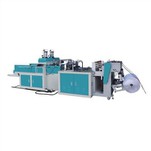
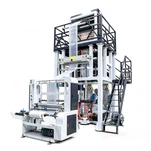
There is a wide variety of bag making machines. They can usually be classified based on three main dimensions: the bag type, the raw materials, and the level of automation.
👜 Classification by Bag Type
This classification is the most intuitive. Different machines are specifically designed to produce certain styles of bags.
• Bottom Sealing Bag Making Machine: Produces bags with a flat, stable base that allows the bag to stand upright. Commonly used for packaging bread, dried fruits, clothing, etc.
• T-shirt Bag (Shopping Bag) Making Machine: Specializes in manufacturing T-shirt bags with handles, also known as vest bags or supermarket shopping bags. These machines typically prioritize extremely high production speeds.
• Three-side Sealing Bag Making Machine: Creates bags sealed on three sides with one side open. It is one of the most widely used models, suitable for packaging snacks, stationery, daily chemicals, and more.
• Center Sealing Bag Making Machine: Features a vertical seal down the middle and two open sides, ideal for packaging liquid or powdery products.
• D-bag / 3D Bag Making Machine: Uses special forming equipment to produce bags with a three-dimensional bottom for increased capacity. Often used for eco-friendly shopping bags and gift bags.
• Zipper Bag Making Machine: Automatically installs a zipper during production, creating bags with self-sealing functionality.
• Special-shaped Bag Making Machine: Produces unique shapes such as circles or hearts via custom molds and cutting devices.
🧵 Classification by Raw Materials
Different bag materials require specific processing technologies, leading to machines dedicated to particular materials.
• Plastic Bag Making Machine: Processes plastic films (e.g., PE, PP, POF) using heat sealing and cutting techniques to make various plastic bags.
• Non-woven Bag Making Machine: Specializes in processing non-woven fabric. Its core process typically uses ultrasonic welding for seamless, water-resistant bonds instead of traditional sewing, commonly used for eco-friendly shopping bags and medical bags.
• Paper Bag Making Machine: Produces paper bags using materials like kraft paper or cardboard through folding, creasing, gluing, and bonding. Ideal for high-end gifts, clothing, and shopping packaging.
• Composite Material Bag Making Machine: Handles multi-layer composites (plastic, aluminum foil, paper) requiring precise temperature and pressure control for high-barrier food and pharmaceutical packaging.
⚙️ Classification by Level of Automation
Based on the degree of human intervention during production, bag making machines are categorized as follows:
• Fully Automatic Bag Making Machine: Automates the entire process from unwinding, forming, sealing, cutting, to counting and stacking finished bags. It offers high efficiency and low labor costs, making it the top choice for large-scale production.
• Semi-automatic Bag Making Machine: Requires manual assistance for certain stages, such as collecting and arranging finished bags. It features a lower investment cost, suitable for small-batch production or customized needs.
• Manual Bag Making Machine: Simple to operate, relying mainly on manual handling and feeding. Best suited for small-batch, high-mix production scenarios.
Additionally, there are all-in-one combination machines on the market. By quickly changing molds and components, these machines can produce various bag types and materials, offering greater flexibility for businesses with diverse production requirements.