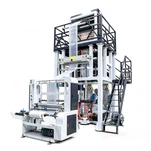
Reducing Film Waste in Bag Making Machine Production
The key lies in prevention before startup and optimization during operation. Below is the detailed operation guide.
I. Before Startup: Precise Adjustment to Eliminate Trial-and-Error Waste
Startup and adjustment cause the most serious waste and must be done in one step.
1. Precise Positioning (Photoelectric Tracking)
• Operation: Adjust the position of the photoelectric eye to ensure high contrast between the cursor color and the background (e.g., dark cursor with light background).
• Effect: Avoid full-roll waste caused by misalignment and reduce adjustment time.
2. Parameter Presetting
• Operation: Preset temperature, pressure and speed according to film material (PE/PP/composite film).
• Effect: Avoid repeated adjustment waste caused by poor sealing, incomplete cutting, etc.
II. During Operation: Fine Control to Reduce Invisible Waste
After stable operation, details determine the amount of waste.
1. Tension Control
• Operation: Maintain stable and matched tension for unwinding, traction and winding.
• Effect: Prevent film stretching, deformation or wrinkling, and avoid defective products caused by wrinkles.
2. Speed Matching
• Operation: Keep the speed of the bag making machine synchronized with the film blowing machine.
• Effect: Avoid film breakage or accumulation due to speed mismatch, which causes downtime and waste.
3. Edge Trim Recycling
• Operation: Install an edge trim recycling machine to crush and directly reuse waste edges.
• Effect: This is the most direct cost-saving measure, which can reduce the waste rate by 5%–10%.
III. Management: Establish a Fool-Proof Mechanism
1. First-Article Inspection: Before starting each roll of film, produce several samples to check dimensions and sealing, then start mass production only after confirmation.
2. Shift Handover Records: Record the meters and finished quantity of each film roll, calculate the rejection rate, and facilitate traceability of problem sources.